Across Europe, agriculture and forestry are becoming increasingly data-driven. Through its research, 4Growth analyses how digital technologies evolve across seven observatories. Drawing on results from the first two survey waves collected by Agrifood Lithuania, this blog explores how Lithuanian operators collect, store and share data, and what this reveals about their digital transformation.
With over 38% of its land area covered by forests and a predominantly small-scale, mixed farming structure, Lithuania creates strong demand for effective digital data solutions.
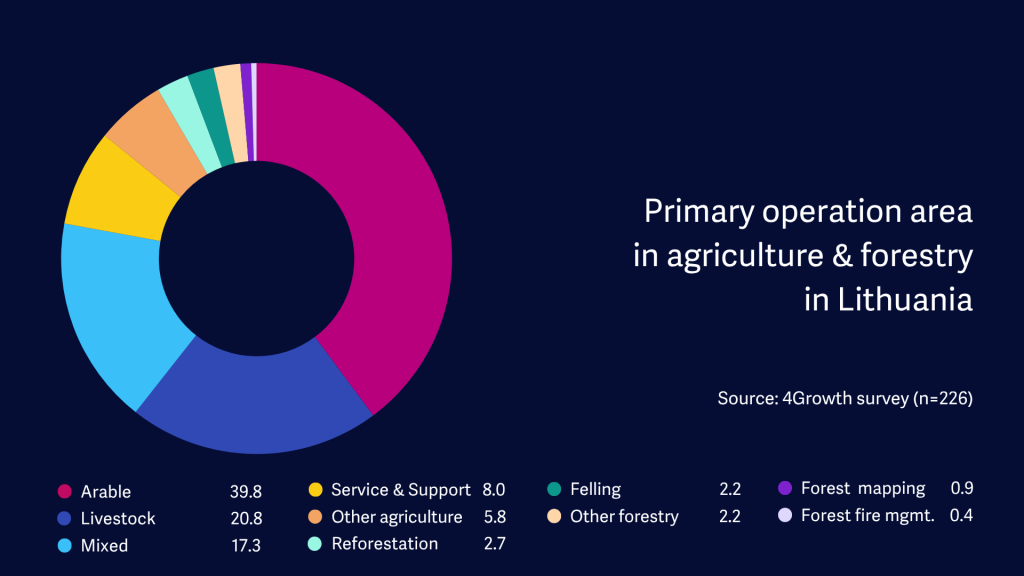
4Growth survey data show that Lithuanian respondents are primarily producers (farmers and foresters), with the survey sample closely reflecting the national agricultural landscape: 39.8% arable agriculture, 20.8% livestock, and 17.3% mixed operations. Forestry activities, including reforestation, felling, forest inventory and fire management, represent a smaller share.
This predominantly agricultural base, combined with Lithuania’s growing digital infrastructure, creates fertile ground for digitalisation. Lithuania’s broader digital ecosystem, including fintech, supports the development of data-driven services for the agri-forestry sector, offering farm-level financial dashboards, payment automation, and data-linked credit scoring.
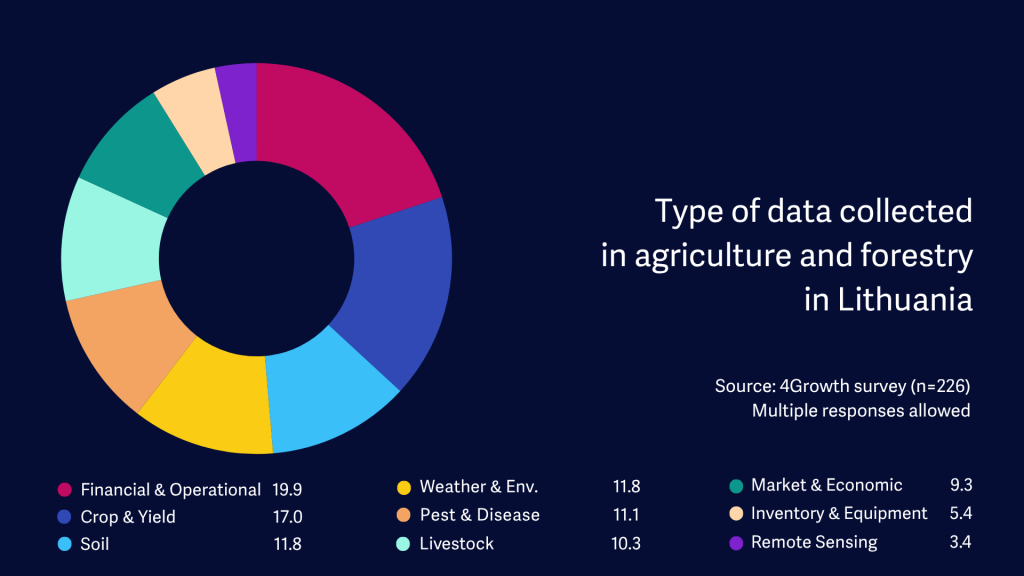
The 4Growth survey reveals a broad and diverse data collection landscape among Lithuanian respondents. Financial and operational data lead the way, accounting for 19.9% of all responses—well above the European average of 11.1%. This is followed by crop and yield data at 16.9%, while soil data and weather and environmental information each make up 11.8% of the data collected. Livestock data represents 10.3%, and pest and disease monitoring accounts for 11.1%, reflecting a balanced focus across key areas of farm management. Lithuania’s emphasis on Financial and Operational data collection is a standout finding across all countries surveyed. This suggests that Lithuanian operators already place strong importance on tracking economic and operational performance.
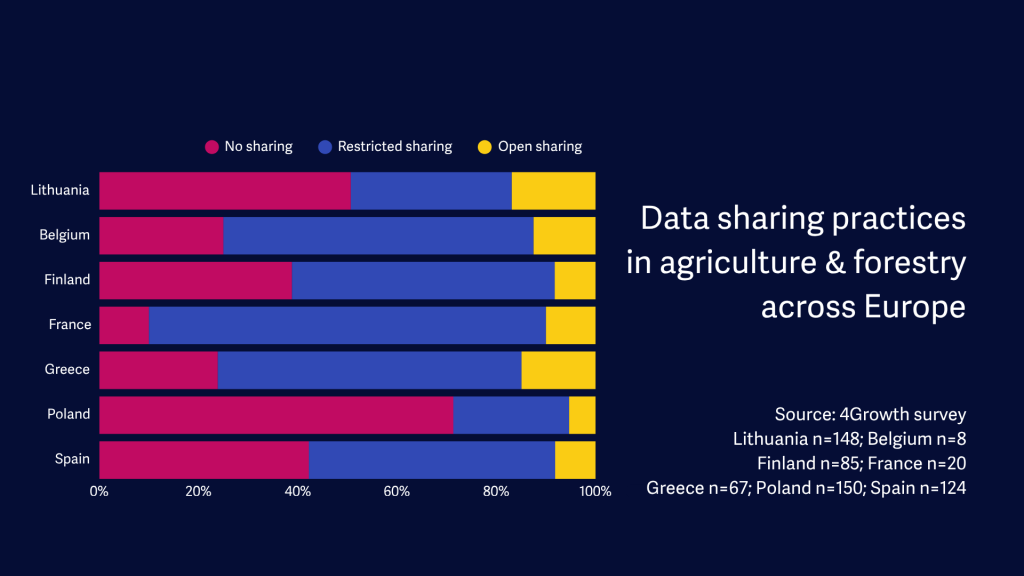
Data sharing behaviour among Lithuanian agri-forestry operators presents an interesting contrast. Compared to other countries surveyed in 4Growth, over half of respondents (50.7%) report not sharing their agri-forestry data—the second highest share among surveyed countries—while 32.4% engage in restricted sharing. At the same time, 16.9% report open sharing, a relatively higher rate compared to countries such as Finland (8.2%) and Poland (5.3%).
This contrast reflects a fragmented data landscape, where many small operators lack incentives or infrastructure to share data, while a growing smaller group involved in cooperative structures or digital service platforms participates in more open ecosystems.
This highlights a clear opportunity for integrated digital solutions. Platforms linking payments with data reporting can enable routine sharing of operational and financial data for farmers, shifting from isolated use to more connected data ecosystems.
56% of all 4Growth survey respondents report having integrated digital technologies into their operations.
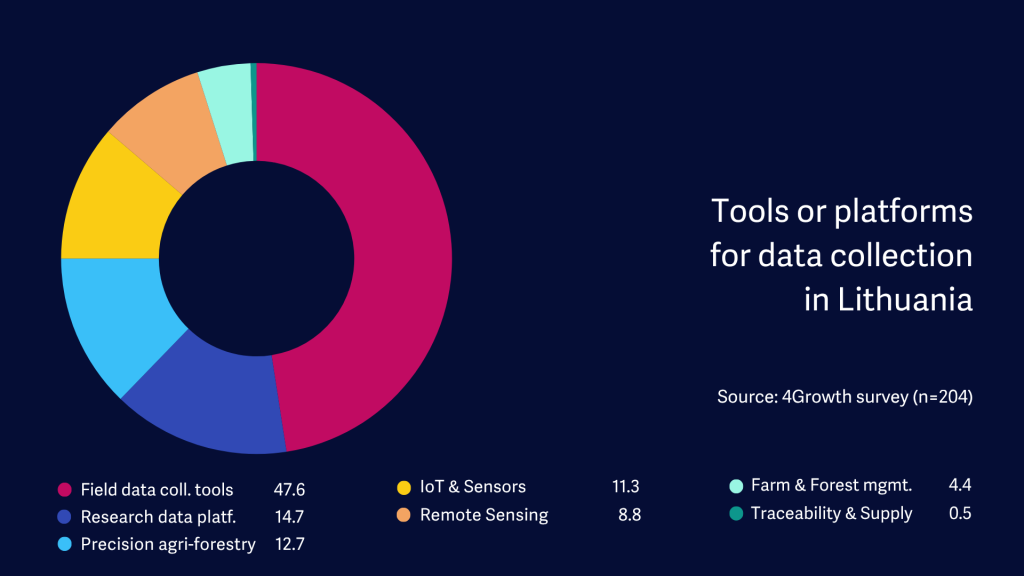
In Lithuania, this figure is slightly lower at 47.5%, with adoption largely centered on tools supporting farm management and field data collection. Field data collection tools dominate usage (47.6%), followed at a distance by research data platforms (14.7%), precision agriculture and forestry technologies (12.7%), and IoT devices and sensors (11.3%). This distribution highlights a strong focus on operational data capture, with more advanced or interconnected technologies still gaining ground.
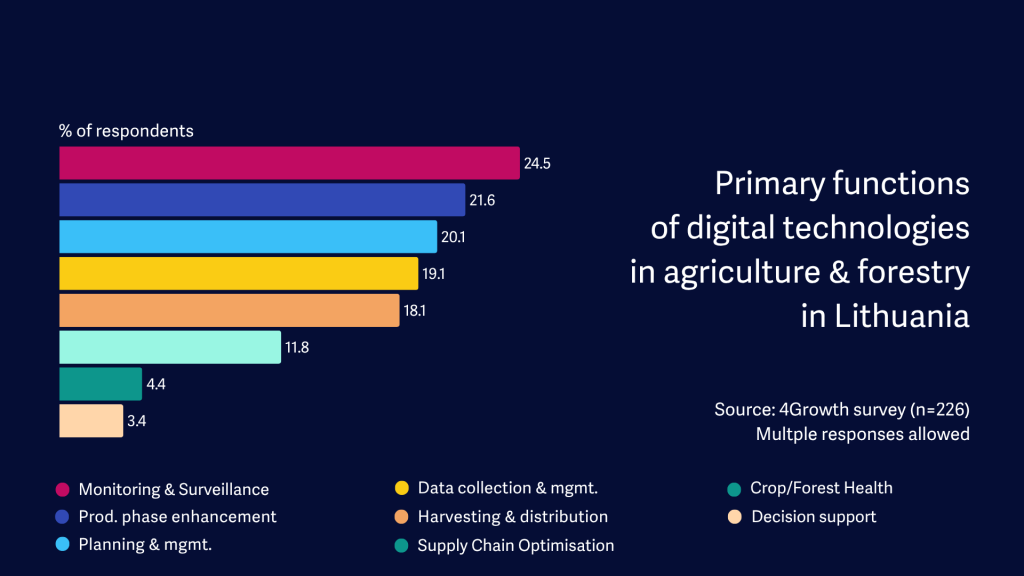
In Lithuania, these technologies are most frequently used for: Monitoring and Surveillance (24.5%), Production Phase Enhancement (21.6%), and Planning and Management (20.1%). Decision-support, planning and supply chain optimisation round out the picture.
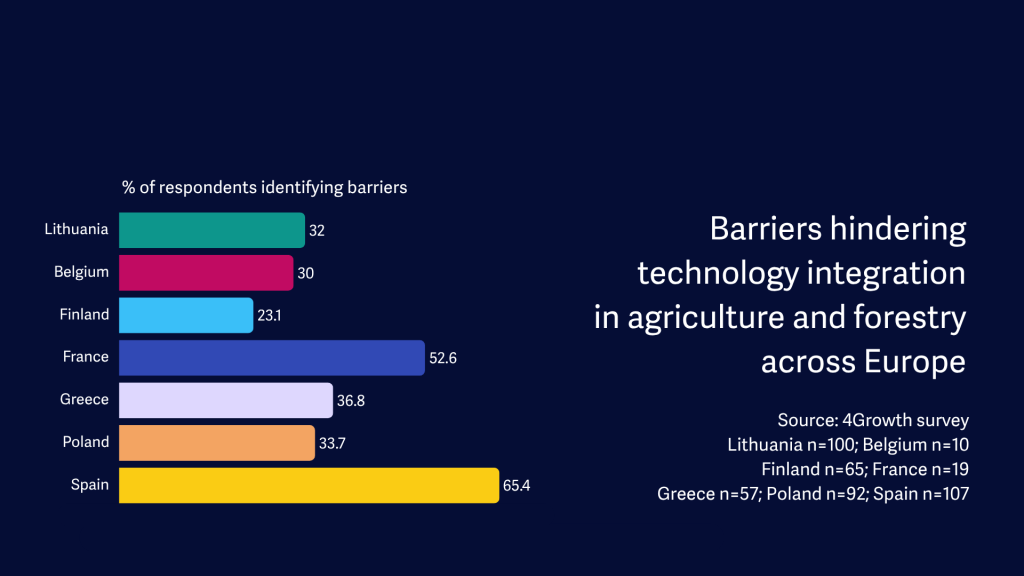
Despite increasing digitalisation, several barriers still limit the broader uptake of technology. The 4Growth survey shows that 32% of Lithuanian respondents report barriers to further digital technology integration – slightly below the European average of 35%, and considerably lower than countries like France (52.6%) or Spain (65.4%).
Among Lithuanian operators who identified barriers, these include high technology costs, limited interoperability, connectivity constraints in rural areas, and gaps in digital skills among older or smaller operators.
These barriers are particularly relevant in a country where 80.9% of agri-operators are classified as small enterprises, highlighting the importance of accessible and affordable digital solutions.
The way agri-forestry data is stored also influences its future usability and shareability. In Lithuania, 38.0% of respondents rely on on-premises or local storage as their primary solution — mirroring the European survey average and underlining continued data fragmentation across the sector.
Data warehouses are the second most common solution (27.5%), followed by cloud-based platforms (24.0%). Hybrid storage accounts for a modest 6.5%, while agricultural information management systems (3.5%) and Geographic Information Systems (0.5%) remain marginal.
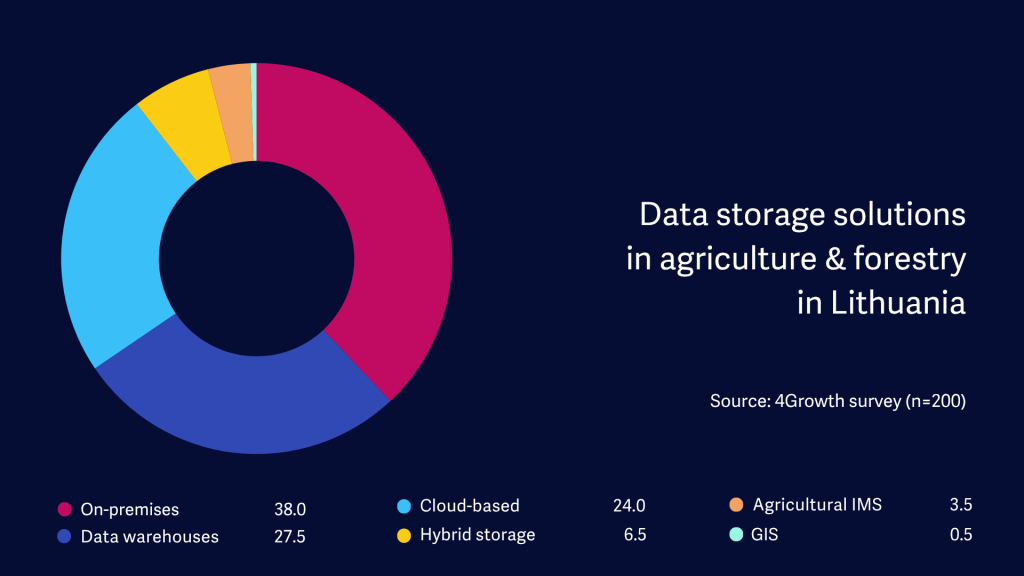
The continued reliance on local storage, particularly among smaller Lithuanian operators, suggests that a significant portion of agri-forestry data remains fragmented and difficult to integrate.
Lithuanian agri-forestry operators are already collecting significant amounts of data, particularly financial and operational information.
However, important gaps remain in data sharing, storage infrastructure and system interoperability. Addressing these challenges will be key to unlocking the full potential of digital agriculture.
Lithuania’s digital ecosystem can support this transition by enabling better data integration and use. By connecting financial systems with agri-forestry data flows, new digital services could help farmers and foresters make better decisions, access finance more easily and meet evolving regulatory requirements.
As 4Growth continues, Lithuania remains a key case study for digital innovation in European agri-forestry. The 4Growth Visualisation Platform, where aggregated survey results and cross-country comparisons can be explored, provides a dynamic view of digital adoption trends across the project’s observatories.
Authored by Adelė Janulionytė on behalf of AgriFood Lithuania. Edited by Evenflow.
Sign up to stay informed of news, key outputs and upcoming events!