As part of its ongoing contribution to the 4Growth project, INTIA recently provided an in-depth media briefing in Navarra highlighting the digital transformation underway across the region’s agricultural and livestock sectors. Building on its role as one of the project’s Digital Observatories, INTIA discussed emerging trends, adoption levels, and the barriers farmers face when integrating new technologies — insights directly linked to the first results collected through 4Growth surveys.
Below is an English-adapted version of the full article authored by Oihane Ochoa for Navarra Capital.
Link to the original article in Spanish
In 2014, Navarra had around 19,000 agri-food holdings, but today the figure does not exceed 12,000. These numbers highlight a transformation that INTIA, a member of SINAI and coordinated by ADItech, aims to support. This is why it is participating in 4Growth, a European project designed to assess the degree of digital tool adoption and promote solutions in this field. The first surveys carried out with professionals in the region show a medium–low level of digitalisation due to the cost of technologies, lack of knowledge, and poor connectivity in some areas.
Back in 2014, Navarra had around 19,000 agricultural holdings. Today, nearly twelve years on, the figure stands at fewer than 12,000. According to the Navarra Agricultural Observatory, 71.16% are owned by people over the age of 55; 20.33% belong to farmers aged between 40 and 54; and only 8.51% are run by people under 40.
These figures point to a sectoral transformation in which INTIA — a public company under the Department of Rural Development and Environment of the Government of Navarra, and a member of the Navarra R&D&I System (SINAI), coordinated by ADItech — seeks to accompany farmers and livestock producers in the region. To this end, the organisation is currently collaborating on twenty-seven projects funded by European, national and regional programmes.
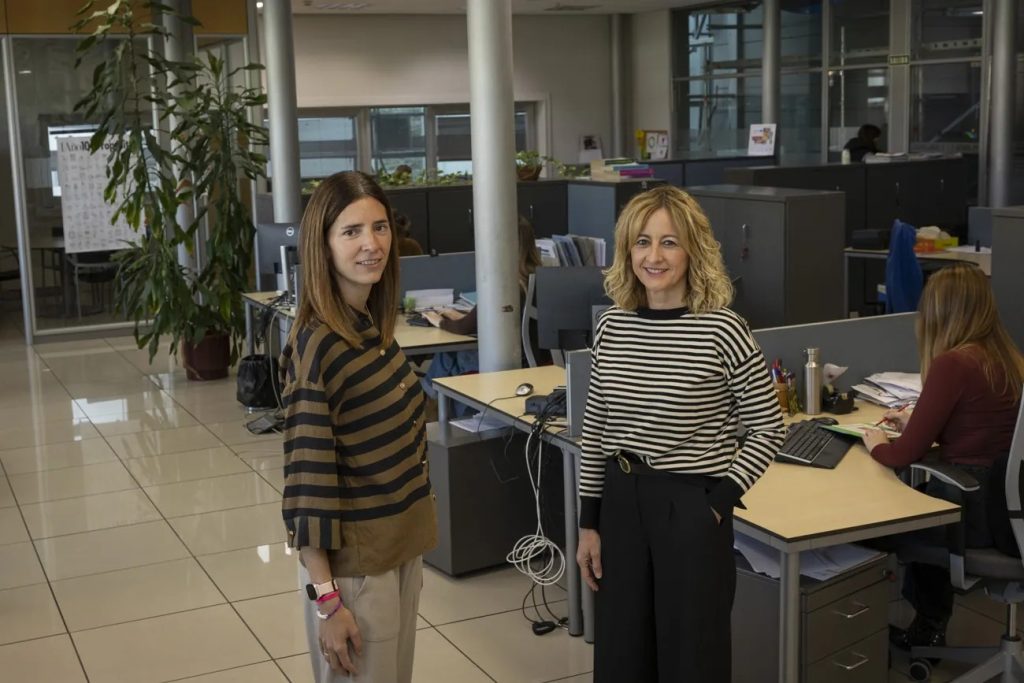
Among them is the European project 4Growth, whose aim is to assess the extent to which digital tools are being adopted in the sector and to drive such solutions for agriculture and livestock farming. The initiative is being carried out by a consortium of thirteen partners, seven of which act as digital observatories. INTIA is the only Spanish organisation involved, responsible for gathering data through surveys to understand where, how and to what extent digital technologies are being implemented in agriculture and livestock farming in Navarra.
4Growth runs for three years, started in January 2024 and is being developed in three phases: the first took place in 2024 and has already yielded significant data; the second has just concluded and its results will be shared soon; and the final phase will begin in a few weeks.
“INTIA is participating in this project as part of its commitment to innovation in the agricultural and livestock sectors. The organisation is highly active in European initiatives and when we received this proposal, we saw that it aligned perfectly with our strategic priorities. These consortia value the fact that we are so present in the sector and maintain direct contact with producers — that is why we were selected,” explains Marta Goñi, INTIA’s R&D coordinator.
After analysing the 50 questionnaires received during the first phase, INTIA highlights their value as a “thermometer” for detecting the challenges and needs facing the sector (the seventy collected in the second phase are currently being analysed). Early results reveal a clear trend: although digital technologies are widely known among respondents, adoption differs between agriculture and livestock farming. The latter shows a lower uptake. When participants were asked to rate their level of digitalisation on a scale of one to five, the overall average was 2.75 — a medium–low level. Most respondents also consider their degree of adoption to be preliminary rather than advanced or fully integrated.
“It is clear that digitalisation and technological innovation are key tools for ensuring the survival of the primary sector. We aim to identify what is happening in order to make informed decisions, take action and offer support,” says Cristina Virto, R&D technician at INTIA.
The survey also shows that age plays a decisive role in both the pace and depth of technological adoption. This is supported by MAPA’s digital observatory (Ministry of Agriculture, Fisheries and Food), which indicates that most professionals fall within an age group where digitalisation is not intuitive, making the effort considerably greater. In addition, the lack of generational renewal makes these investments even more challenging.
According to the results gathered so far, the main barriers identified are the cost of technologies (particularly the high initial investment required), the lack of knowledge needed to apply them, and poor connectivity in certain rural areas — in that order. However, Navarra’s producers acknowledge that new technologies could improve management, safety, monitoring and decision-making.
INTIA’s involvement in 4Growth forms part of its Strategic Innovation Agenda, where digitalisation is a cross-cutting priority across all themes. In response to the project’s findings, the organisation offers several tools to support the sector. One example is the Experimentation Manager. “It is a robust internal knowledge-transfer system, essential for delivering high-quality external services. It allows us to systematise and ensure the continuous capture of experimental knowledge generated within the organisation, while helping us respond more swiftly and effectively,” Goñi explains.
INTIA also promotes training in digitalisation through precision agriculture courses, particularly targeted at beneficiaries of agricultural support schemes and young farmers. Topics covered include remote sensing, the use of precision machinery, geographic information systems (GIS), and sensors.
Meanwhile, the organisation’s experimental work area focuses on developing agricultural tools such as remote sensing using satellite and drone imagery, IoT, water, soil and plant sensors, precision machinery, variable-rate technology, yield mapping, INTIA’s Warning Station, and the use of artificial intelligence in predictive pest models, among others. In livestock farming, efforts focus on technologies for extensive systems, geolocation and livestock monitoring, virtual fencing, monitoring of livestock processes, and remote sensing for pasture and grazing land management.
“Given the enormous challenge of digitalisation and the rapid pace at which technologies emerge and evolve, collaboration with other organisations is essential. That is why, in addition to being members of the IRIS Digital Innovation Hub, we also work jointly with other entities on R&D projects. Notable among these are 4Growth itself, EDIH IRIS, and the Sustainable Grazing RDP…,” notes Virto.
According to INTIA’s R&D coordinator, generational renewal is crucial if Navarra is to maintain a strong agricultural sector in twenty years’ time: “Without people willing to enter the agricultural sector, there will be no innovation, no digitalisation and no meaningful climate transition. At INTIA we work through the Lurberri programme to train, accompany and support both young people and those who enter the sector later in their careers. This initial support work is more necessary than ever.”
Another concern for the organisation — and a major factor shaping the sector — is climate change. INTIA has been testing climate adaptation and mitigation techniques and tools for years. At the same time, although not directly affecting Navarra, global population growth will increase the demand for food. For this reason, the EU considers that rising concerns over health and the environment will create opportunities for products characterised by traceability, reliability and distinctive consumer experiences.
“At this point, it is essential for INTIA to continue supporting the sector in creating short value chains, promoting differentiated quality, and building trust between producers and consumers. I envision a more technologically advanced, sustainable and diverse agricultural sector in Navarra. A sector where innovation and digitalisation are key tools for keeping rural areas alive, with profitable and resilient farms,” Goñi concludes.
As the leader of the Spanish Digital Observatory within 4Growth, INTIA plays a central role in gathering regional data, analysing digital adoption trends, and providing insights that support the project’s wider European perspective on agricultural and forestry digitalisation. Their work contributes directly to shaping solutions, identifying gaps, and supporting digital transition across rural Spain. Discover more about INTIA’s role in 4Growth in the respective Meet Our Observatories article.
Banner image: The use of precision farming technologies. Credit: INTIA
Sign up to stay informed of news, key outputs and upcoming events!