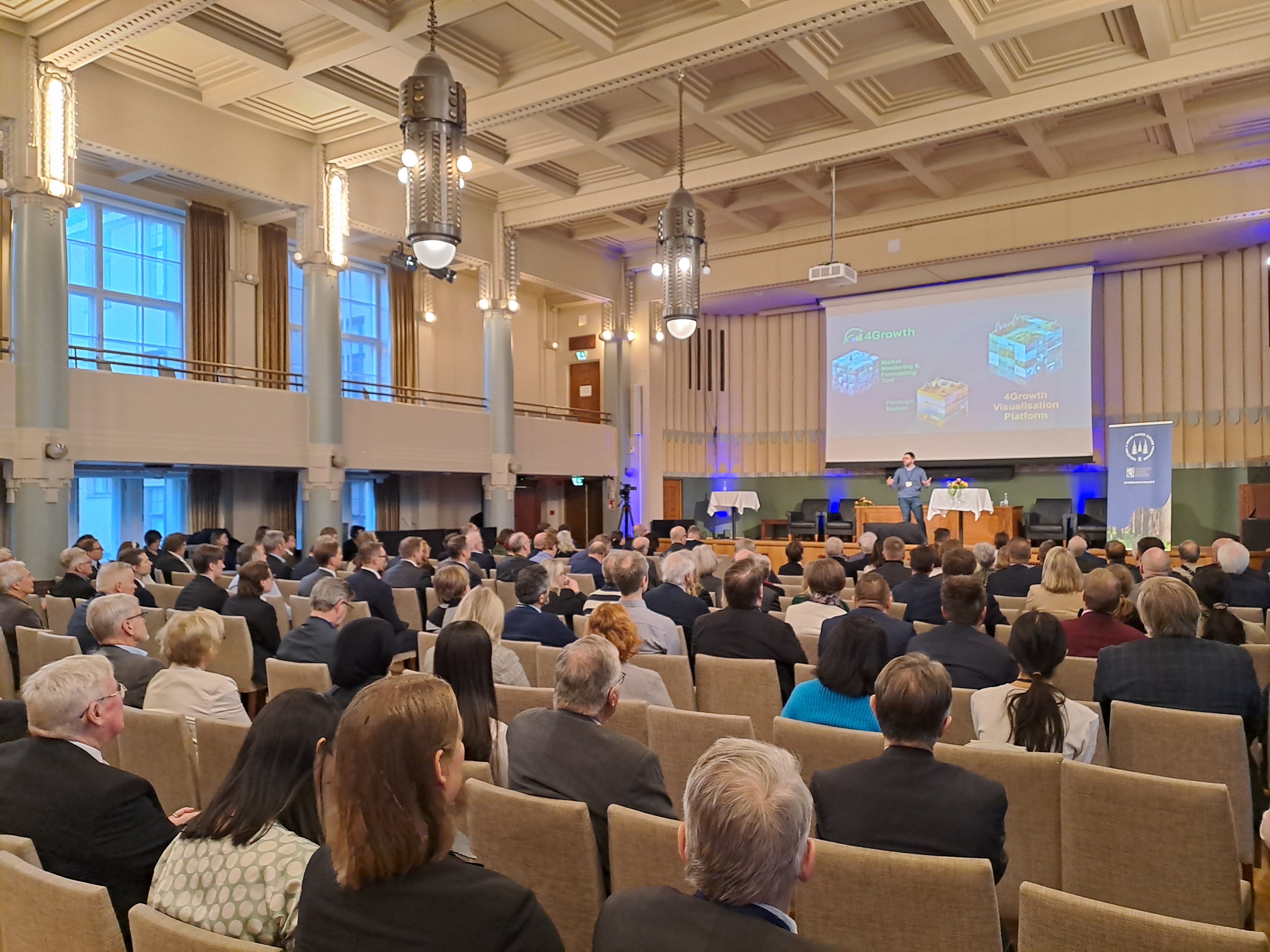
On 19 November 2025, around 220 Finnish Forest Products Engineers gathered at the Pörssitalo in Helsinki for the PI Autumn Summit. Organised by the Finnish Forest Products Engineers’ Forest Association (PI), the summit serves as a key networking platform for professionals and companies across the forest industry. This year’s theme—Tariffs, Security, and AI as Drivers of Change—highlighted the challenges and opportunities shaping the future of the sector. It reflects the rapidly changing operating environment, where geopolitical tensions, supply chain disruptions, and accelerating digitalisation are reshaping strategic decisions. Arash Hajikhani, Research Professor at VTT Technical Research Centre of Finland presented the 4Growth project, which develops tools to support decision-making, to this audience.
Maarit Lindström, Director and Chief Economist at the Finnish Forest Industries Federation, outlined how new US tariffs and shifting production capacities are creating uncertainty for European forest industry stakeholders. Her intervention highlighted the growing importance of strategic resilience as global trade dynamics evolve.
The discussion then moved toward how companies can adapt their strategies and investment decisions in this uncertain environment.
Andreas Birmoser, EVP of Cartonboard at Stora Enso, discussed leadership and investment under volatile market conditions. He emphasised the value of scenario-based thinking to guide long-term strategic decisions—an approach that closely aligns with the 4Growth foresight scenarios, available through the project’s Visualisation Platform.
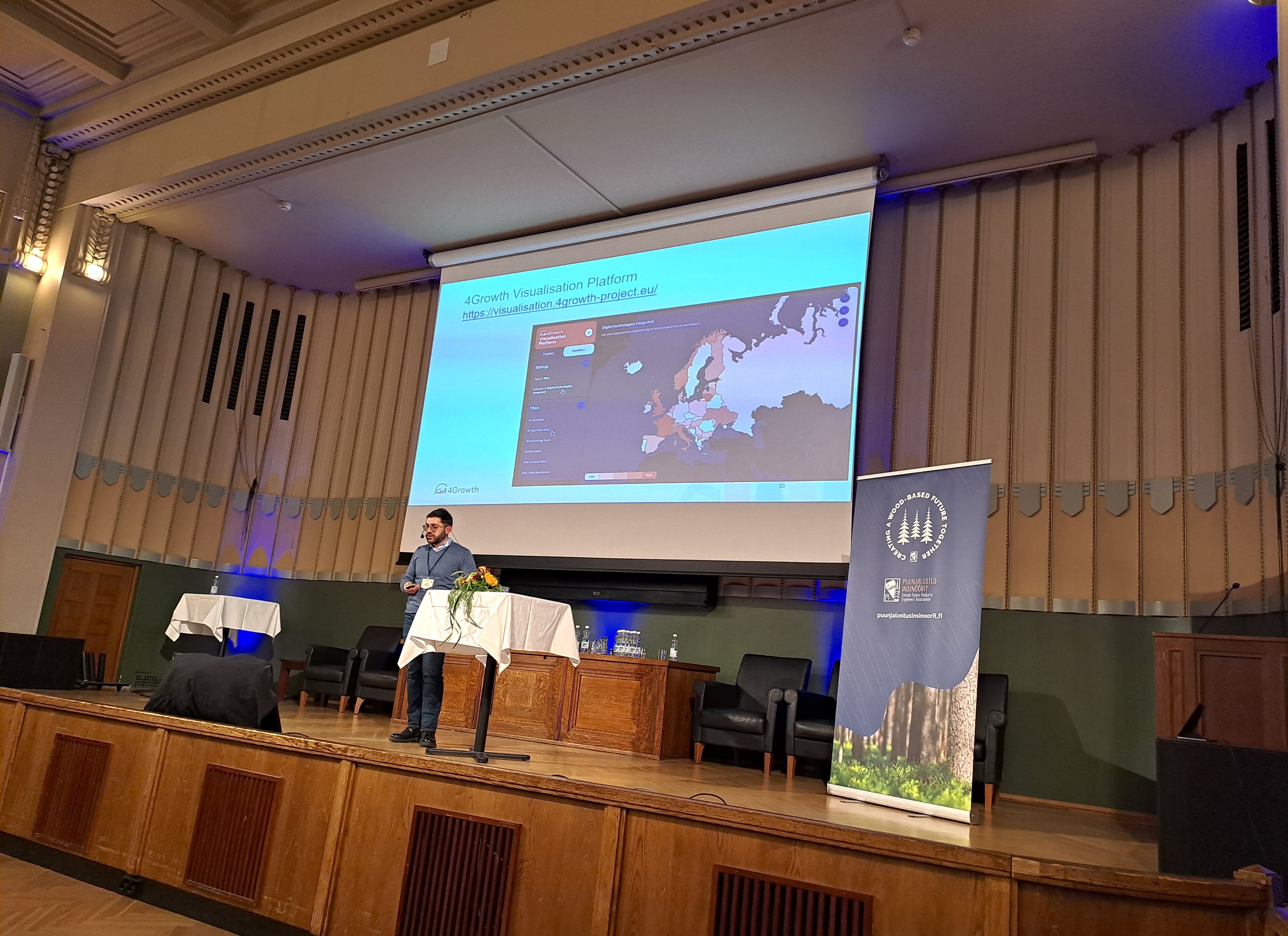
Arash Hajikhani spoke on the topic “Exploring Digital Solutions in Agriculture and Forestry through AI and Large Language Models.” An overview of the 4Growth project and a demonstration of the 4Growth Visualisation Platform were provided.
Hajikhani then introduced an automated data collection method designed to gather insights on the use of digital technologies in the forestry sector. The approach combines web scraping to automatically collect information from company websites with Large Language Models (LLMs) to extract relevant answers to specific survey questions.
This automated website analysis complements traditional survey data by providing broader, up-to-date insights into how companies communicate about digitalisation online. However, information on challenges, costs, and barriers is typically not available on company websites, indicating areas where the method is less effective.
As part of his presentation, Hajikhani provided a more detailed look at how individuals or companies appear to AI, and whether the information about them is accurate and visible, the main message being: “Mind your digital footprint and correct it if necessary.”
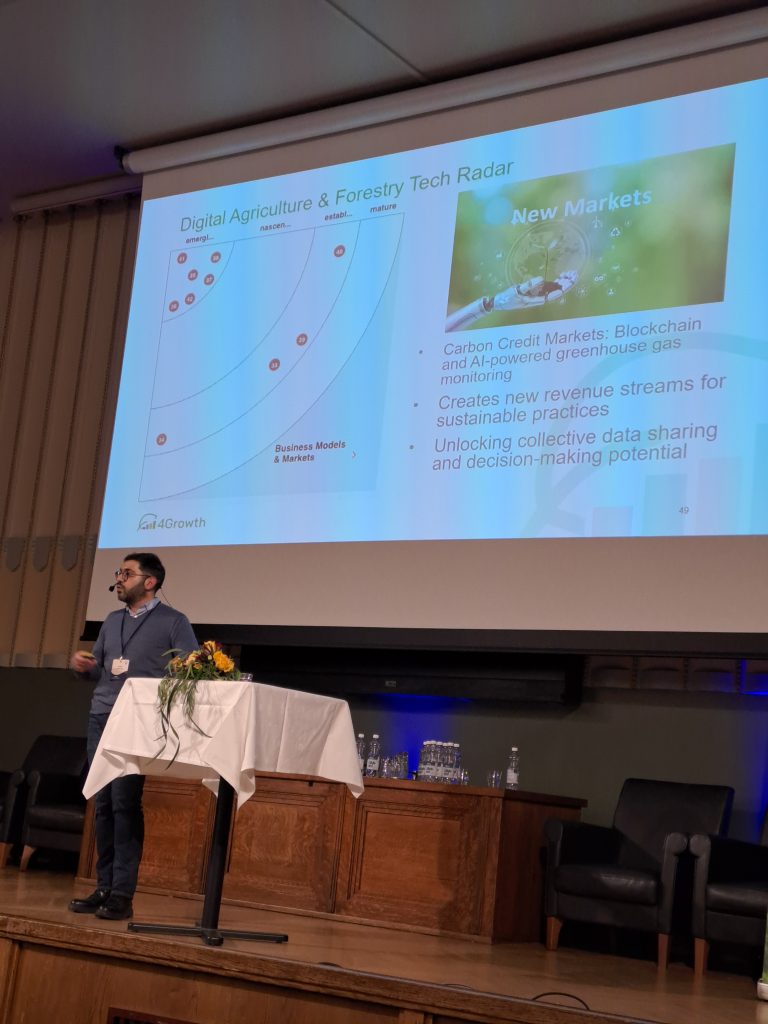
An interactive Tech Radar demo followed based on the 4Growth trend and foresight research and partly supported by AI and LLM methods. This demonstrated how the 4Growth project supports future-oriented thinking by combining foresight tools with AI-driven insights.
Timi Hyppänen, SVP at Metsä Fibre, provided a concise overview of how AI generates value across the forest industry value chain. He emphasised the importance of data quality, digital competence, and a human-centric digital culture for successful technology adoption.
Overall, the PI Autumn Summit 2025 demonstrated that the forest industry stands at the intersection of geopolitical change, strategic investment decisions, and rapid technological development. The discussions highlighted the need for resilience, foresight, and digital competence, areas where initiatives like the 4Growth project can provide practical value for industry stakeholders.
Sign up to stay informed of news, key outputs and upcoming events!