The transition towards digitalised forestry is rapidly reshaping how Europe manages its natural resources. Within the 4Growth project, extensive survey work across seven European observatories has produced critical new evidence regarding the adoption and practical use of digital technologies. After three comprehensive survey waves, clear patterns have emerged. This article highlights the final insights on digital technology in Greek forestry, drawn from the Greek Forestry Observatory, led by the Aristotle University of Thessaloniki (AUTH).
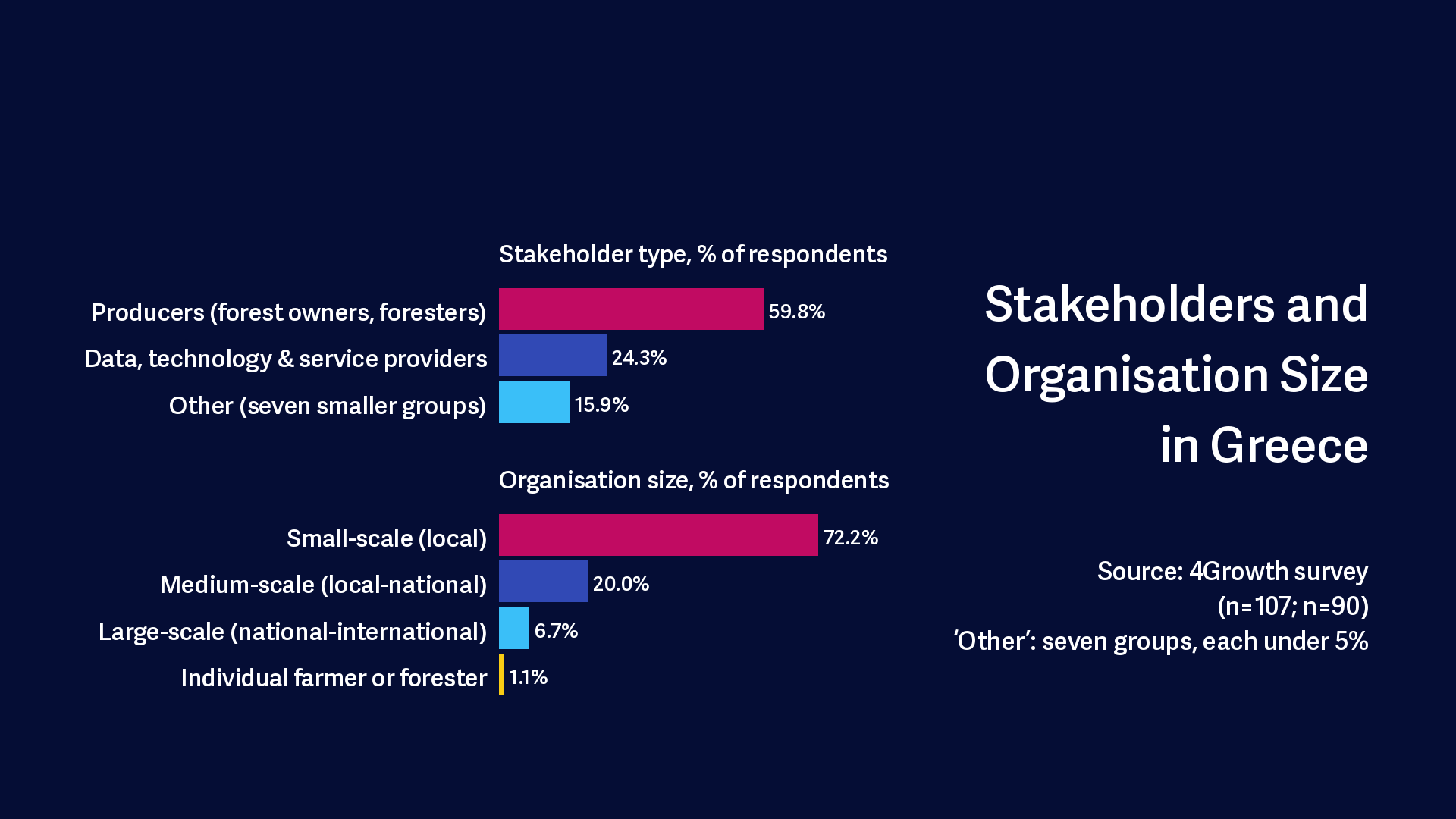
To truly understand the digital landscape, one must look at the professionals doing the practical work. The Greek forestry sector represents a diverse ecosystem of professionals, predominantly featuring producers, such as forest owners and foresters (60%), followed by Data, Technology, and Service Providers (24%).
Notably, 72% of respondents work within small-scale organisations. Of those who answered (18), the majority provides services at local level (61%). Because these grassroots organisations are intimately connected to rural communities and daily forestry practices, they provide invaluable, first-hand insight into the operational realities of the sector. Their perspectives are crucial for identifying practical challenges and understanding how technological needs vary across distinct local contexts.
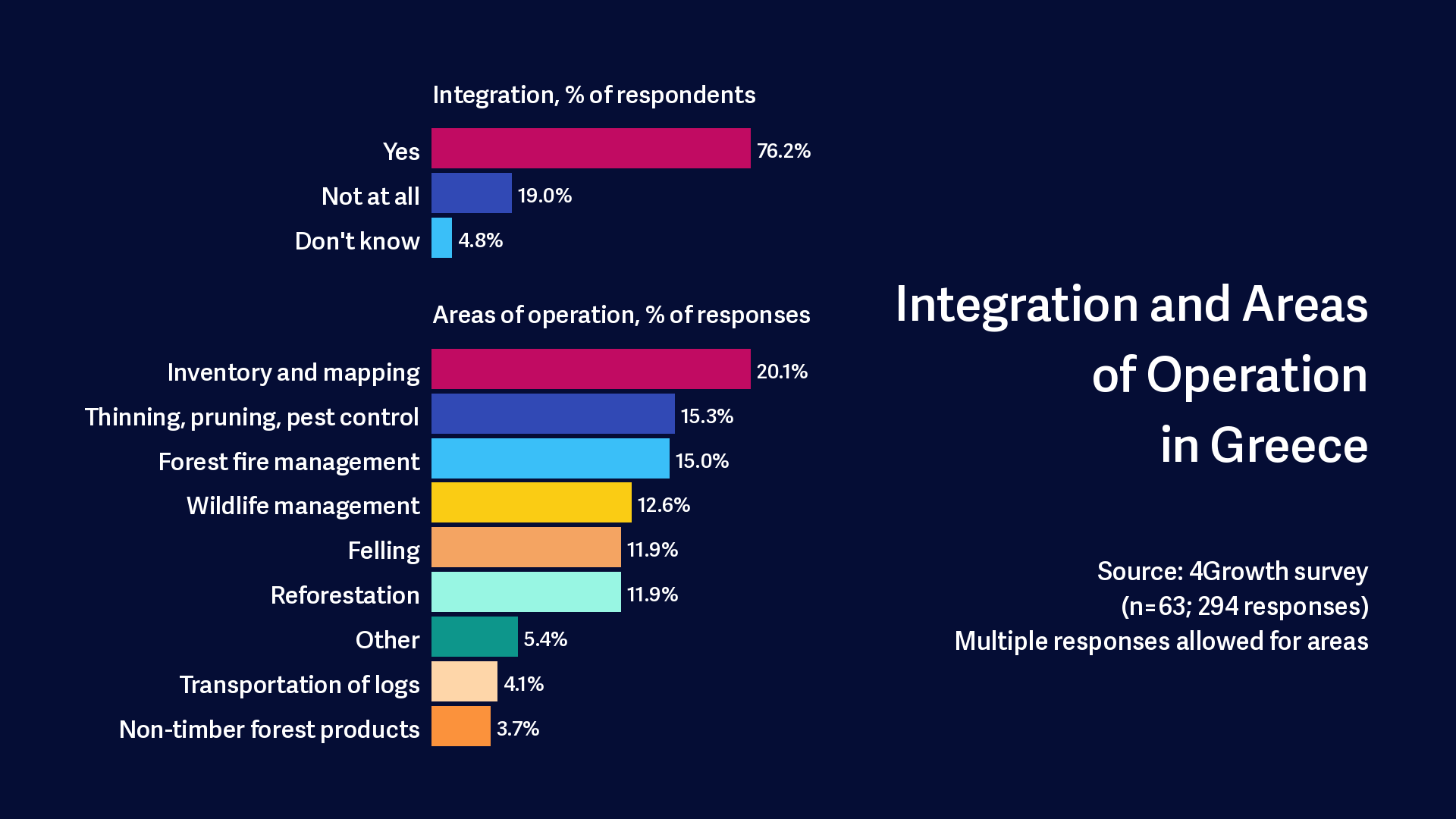
Digitalisation is no longer a future concept; it is actively shaping Greek forestry today. An impressive 76% of respondents report that their organisations have successfully integrated various digital technologies into their workflows.
These digital tools support a broad range of core activities. The primary focus is inventory and mapping (20%), followed closely by critical forest conservation activities like thinning, pruning, and pest control (15%), and forest fire management (15%), an essential priority in the Mediterranean region. Other frequently reported activities include wildlife management (13%), felling (12%), and reforestation (12%). This spread shows that digital tools are already part of a wide range of forestry operations.
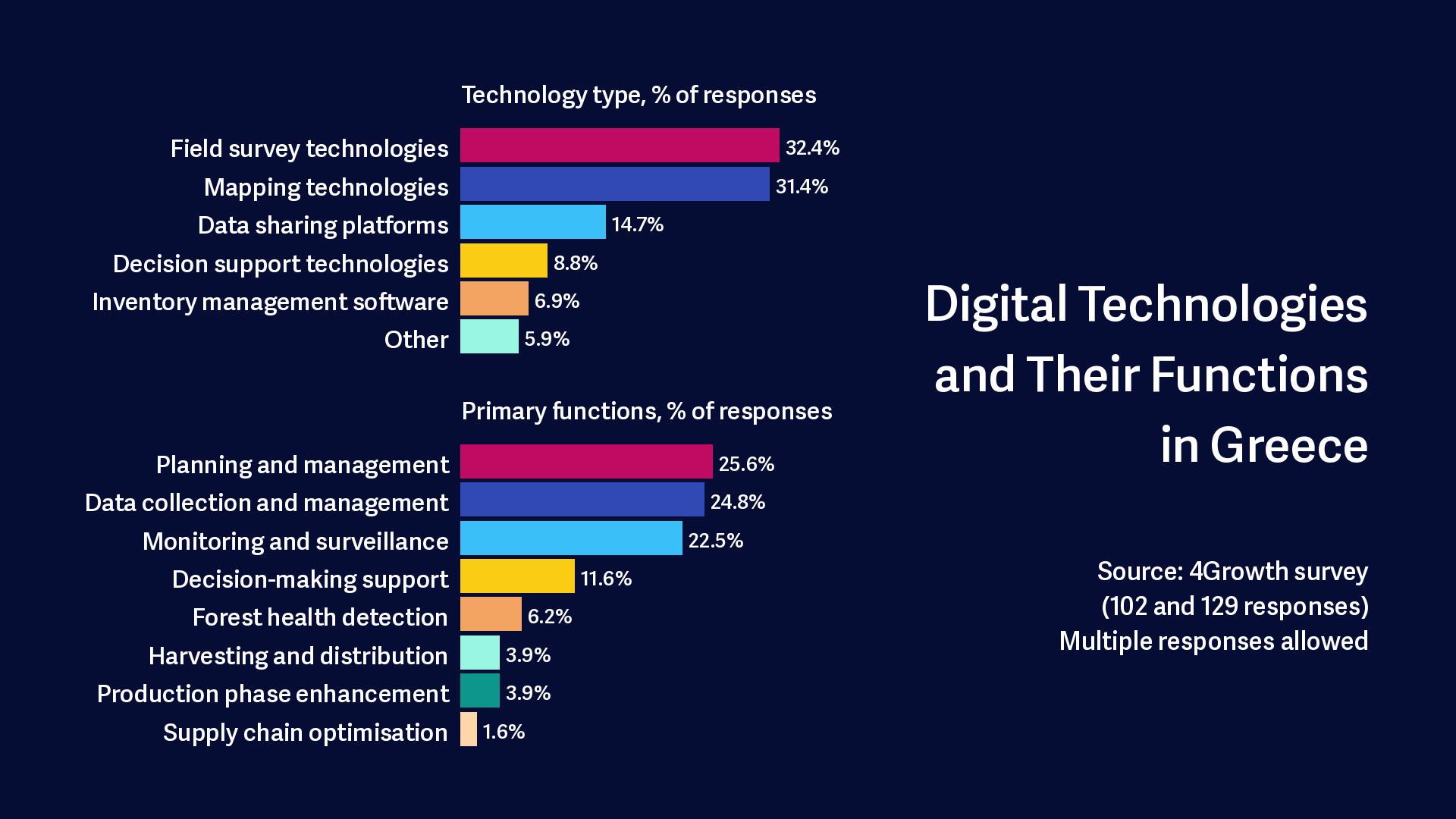
When looking at specific tools, field survey and mapping technologies (such as ground sensors, drones and satellite imagery) dominate, accounting for 64% of the recorded answers. Across all evaluated technologies, Greek forestry professionals report that the primary functions are management and planning (26%), rigorous data collection (25%), and monitoring and surveillance (22%). In terms of data outputs, geospatial data is the most cited data type (63% of responses).
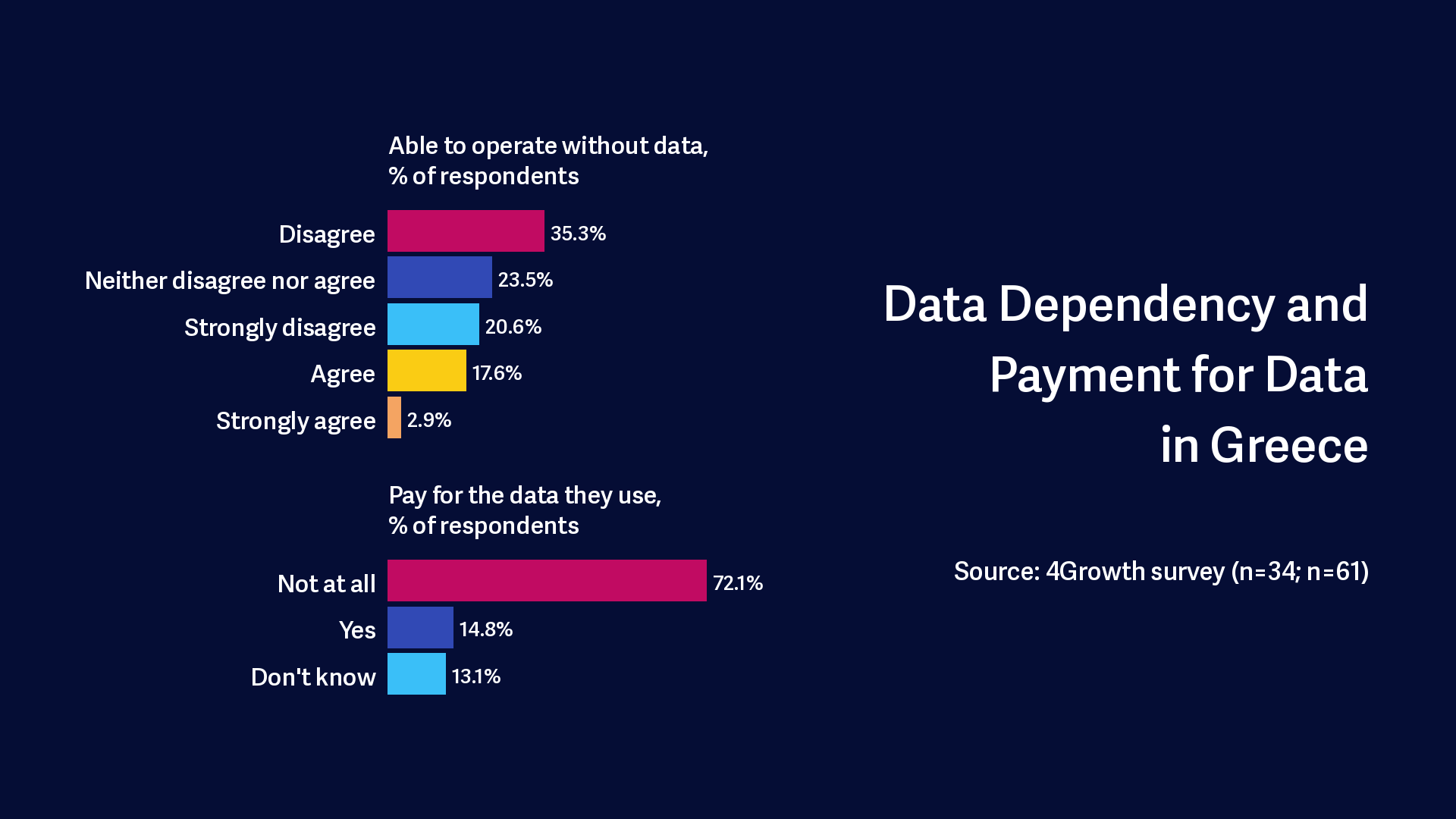
Interestingly, the survey reveals a stark data dependency: 56% of respondents state they would not be able to operate effectively without the data they collect. Additionally, 72% report that they do not pay for the data they use, suggesting that access is often free, open-source, or bundled with other services. This may reflect the use of open-access data sources, as well as data that organisations collect and generate internally, allowing forestry professionals to leverage valuable insights without facing steep direct financial costs. However, this high data dependency may increase the need for more robust digital infrastructure to manage and utilise critical information effectively, a priority reflected in the survey, where 62% of respondents reported plans to expand or upgrade their digital infrastructure.
Despite impressive digital integration, hurdles remain. When asked if they face specific barriers to further adoption, respondents were divided: 45% answered yes, 34% answered no, and 21% were unsure. This level of uncertainty indicates that a fifth of the personnel struggles to even identify or assess the obstacles limiting their progress. For policymakers, this highlights the need for improved communication, targeted educational information, and accessible advisory support to help organisations make confident future investments.
Connectivity presents another nuanced challenge. Basic access is not the primary obstacle, as 94% of respondents have network connectivity. However, 50% explicitly stated that better connectivity would encourage them to adopt additional tools. This suggests that better quality and coverage, rather than basic access, could support further adoption.
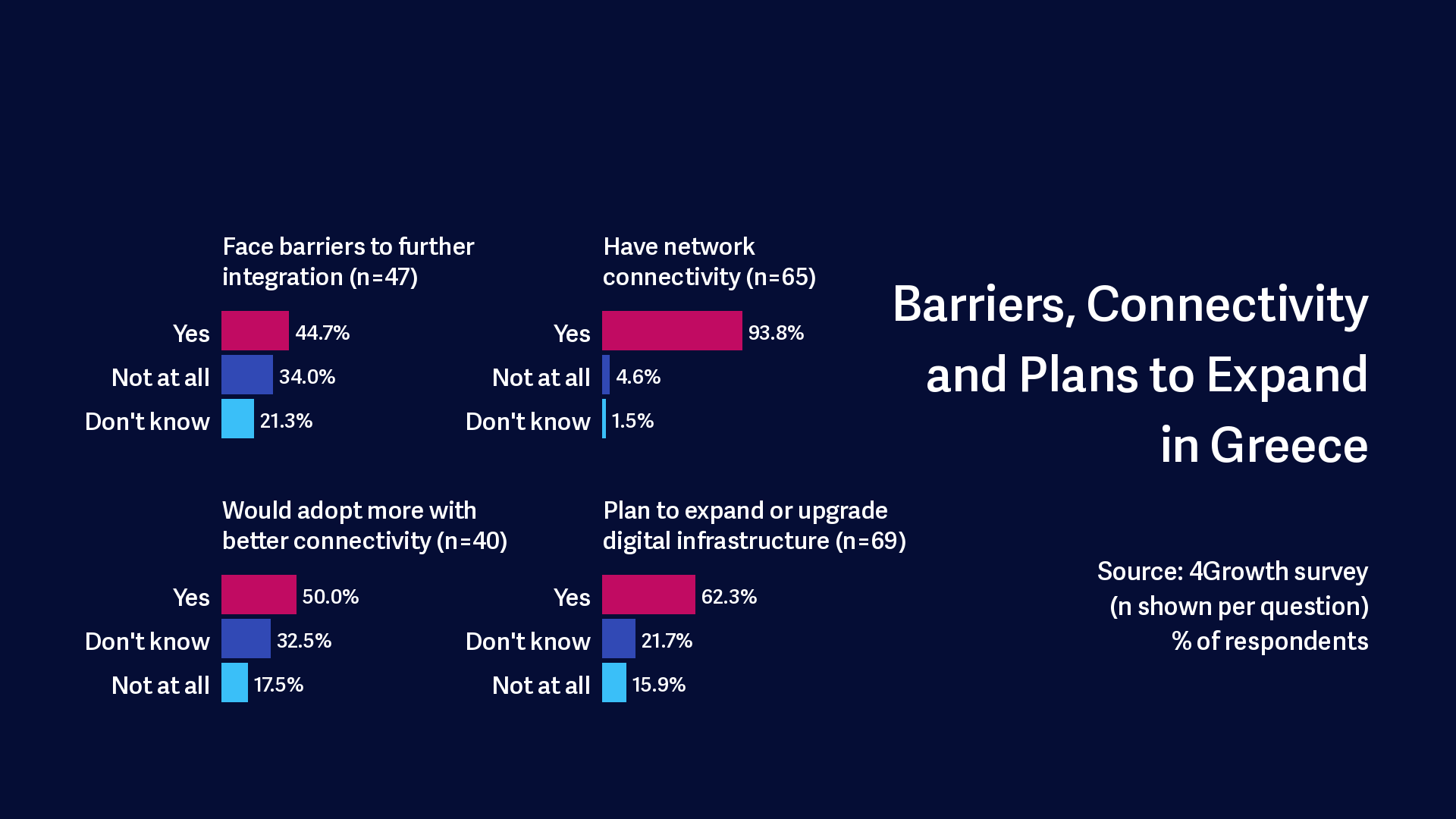
Greek forestry stakeholders are not standing still. A striking 62% of those who answered express a strong intent to upgrade and expand their digital capabilities in the near future. These insights point to a sector that is ready for the next stage of digitalisation, provided the right advisory and infrastructural support is in place. The high adoption rate and strong reliance on data show that these technologies are no longer just being tested: they are part of everyday forestry work.
Explore the full survey results for Greece, or see how they compare with other European countries, on the 4Growth Visualisation Platform.
Authored by Ioannis Gitas and Konstantinos Antoniadis on behalf of the Laboratory of Forest Management and Remote Sensing School of Forestry and Natural Environment Aristotle University of Thessaloniki. Edited by Evenflow.
Sign up to stay informed of news, key outputs and upcoming events!